

The SIS Group of Schools in Indonesia includes the very successful Singapore International School (in South Jakarta, Indonesia) started in 1997 and the SIS National Plus (Private) Schools using the SIS curriculum.
In 1995, several leading members of the Singapore business community felt the need for a Singapore-style school in Jakarta to cater for children of Singaporeans and other nationalities working in Indonesia. Initial meetings with the then-Singapore Ambassador to Indonesia H.E. Edward Lee fired the enthusiasm needed to start the project. This culminated in a meeting in early 1996 with several Ministers in Singapore, including the then-Deputy Prime Minister of Singapore. The inspiration drawn from these meetings set the wheels in motion.
The team moved quickly to secure the help of their alma-mater Raffles Institution, one of Singapore’s premier schools. The expertise of one of Singapore’s most respected educationist Mr. Eugene Wijeyhsingha (former Principal of Raffles Institution) was utilized to give the school a good foundation to start off with. Soon afterwards the Board of Governors of SIS successfully lobbied the release of Mr. Magendiran also from Raffles Institution to be the first Principal of the Singapore International School in 1997. Mr. Magendiran is today the Vice-Principal of Raffles Institution, Singapore. SIS has since used Raffles Institution as a consultant.
With the help of these experts, SIS started on a solid academic footing. Moving from its temporary premises in the North to a bigger campus in the South, SIS employed the expertise of another prominent educationist Ms. Nanda Bandara, former Principal of premier Singapore primary schools Raffles Girls’ Primary School and Haig Girls’ School. Under her leadership, the school saw the enrolment steadily increase. And the long waiting list of students pushed the Founders to expedite its search for more permanent premises with facilities matching the top international schools in Jakarta.
A Permanent Site for SIS International
With the assistance of Mrs Sonya Lee (wife of the then-Ambassador to Singapore), SIS was able to secure generous donations from individuals and also from the Lee and Shaw Foundations, respected institutions in Singapore. SIS has since named the school library the “Sonya Lee library” in appreciation of her help in the early days of the school’s growth.
SIS finally moved into its campus, which is the talk of the town, in the housing complex of Bona Vista, South Jakarta. Located in a quiet neighbourhood bordering Pondok Indah, the School is only two minutes from the Outer Ring Road making it accessible from many parts of Jakarta. The SIS complex has an open, airy concept amidst lush, contoured gardens. In Bona Vista, SIS is able to enjoy all the amenities in this complex which include a competition-sized pool, soccer field, basketball courts and tennis courts. After a busy construction schedule, SIS finally opened its doors in its new complex in January 2002 with bigger classrooms and better facilities.
The enrolment jumped even higher with the student population coming from more than 35 different nationalities.
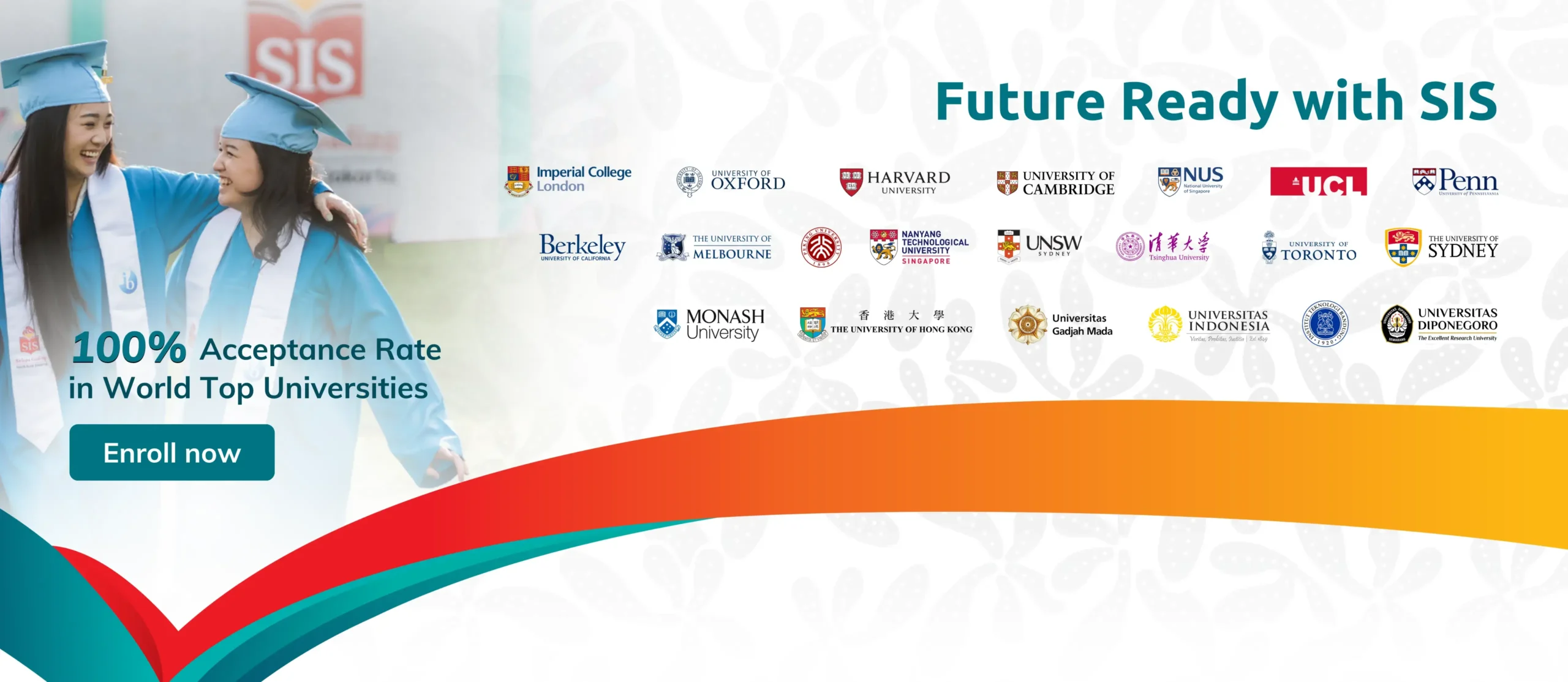
With its new campus, SIS is able to provide the best to students right from the Nursery and Kindergarten levels, up to Primary and Secondary classes, and then through to the Junior College (K to Grades 12) before they move on to the top universities in the world.
The Start of SIS National Plus (Private) Schools for Indonesia
The success of the Singapore International School, set up in 1997, allowed the Founders of the school and the educationists involved to deeply appreciate the complexities of subjecting Indonesian students to a curriculum modelled after the Singapore education system, which demands high standards. The lack of proficiency in English and Mandarin, and inconsistencies in the foundations of core subjects like Maths and Science, observed in the pioneer batch of Indonesian students pushed for an immediate need for a carefully designed curriculum derived from that used in the Singapore International School.
SIS started two pilot National Plus schools in Kelapa Gading (North East Jakarta) and Kebon Jeruk (West Jakarta) in 2002. The aim was to monitor the performance of the students in a “controlled environment” with the new SIS curriculum designed especially for the National Plus schools. After 2 years, SIS noted remarkable results from its students and decided it was ready to roll out the schools for the upper and middle income population in Indonesia.
The primary objective was to ensure that people who could afford these schools do not migrate from the provinces to major cities, and similarly those from major cites do not migrate out of Indonesia for the sake of quality education. SIS essentially wanted to prevent a bran-drain, besides bringing quality education to as many Indonesians as possible.
SIS invited the International Finance Corporation (member of the World Bank Group) to examine the results in these two pilot schools and sought a partnership with the IFC to expand its operations. After a rigorous due diligence on its systems, curriculum, vision and financial status, the IFC decided to partner with SIS to roll out schools in Indonesia under the brand name “Singapore School (affiliated to Singapore International School).”
IFC experts from Washington provide regular technical assistance to SIS as well as conduct annual visits to, and appraisals of, the various SIS schools.
In a IFC press release in 2004, IFC East Asia Regional Director Javed Hamid described the project as …..”one that will extend access to high quality primary and secondary education in Indonesia.” The IFC press release also mentioned SIS “providing high quality education modelled after the Singapore curriculum.”
On another front, SIS continues to invite investors with the same vision, to start these schools under a management agreement to ensure a quicker roll-out of these campuses. The SIS model is a sustainable model both for investors and for the fulfillment of social concerns.
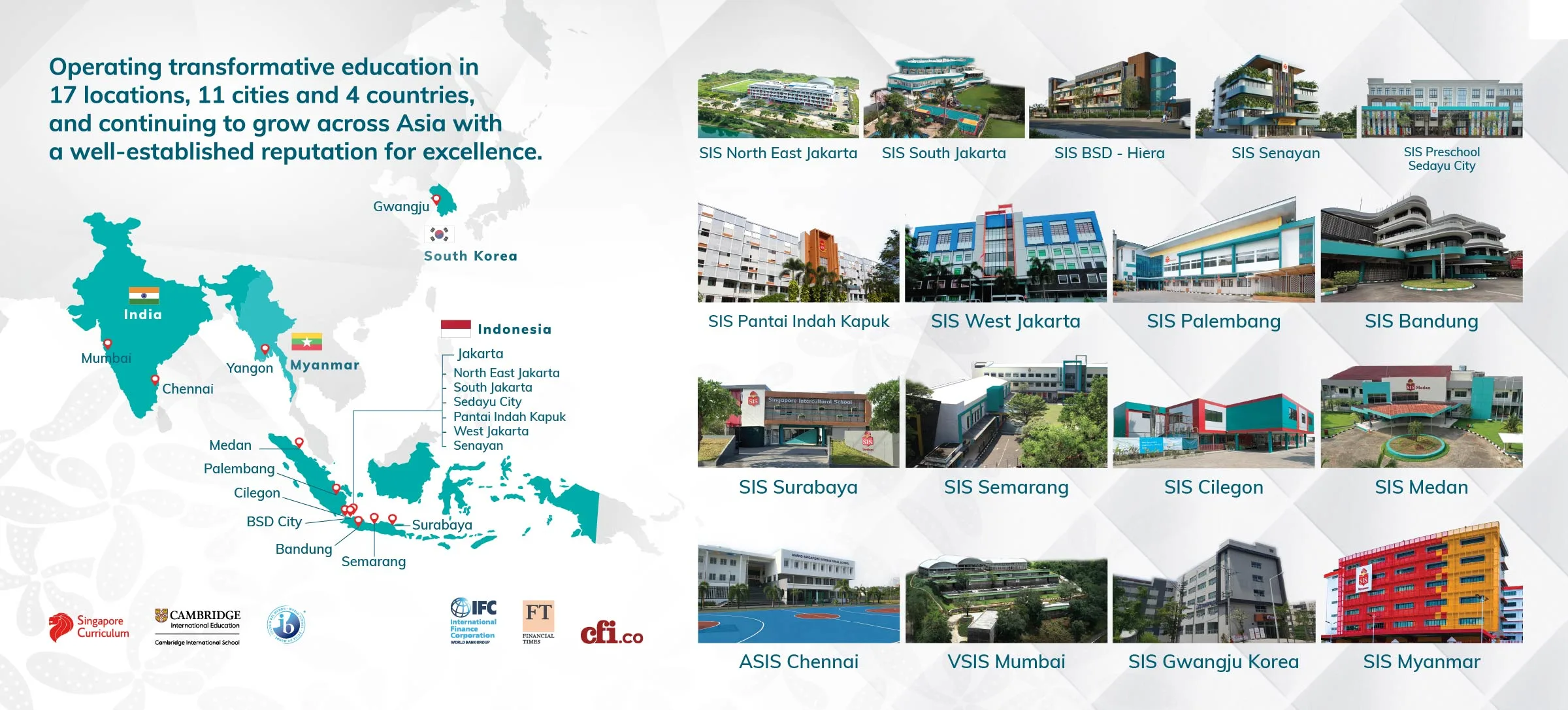
.SIS International and the SIS National Plus (Private) Schools are strategically located in Jakarta and in other parts of Indonesia. The Founders plan to have one iconic SIS school in each of Indonesia’s provinces plans also inculde to take the SIS schools model to other countries.
SIS is looking to start schools for the middle and lower income population of Indonesia and a public-private initiative for teacher-training.